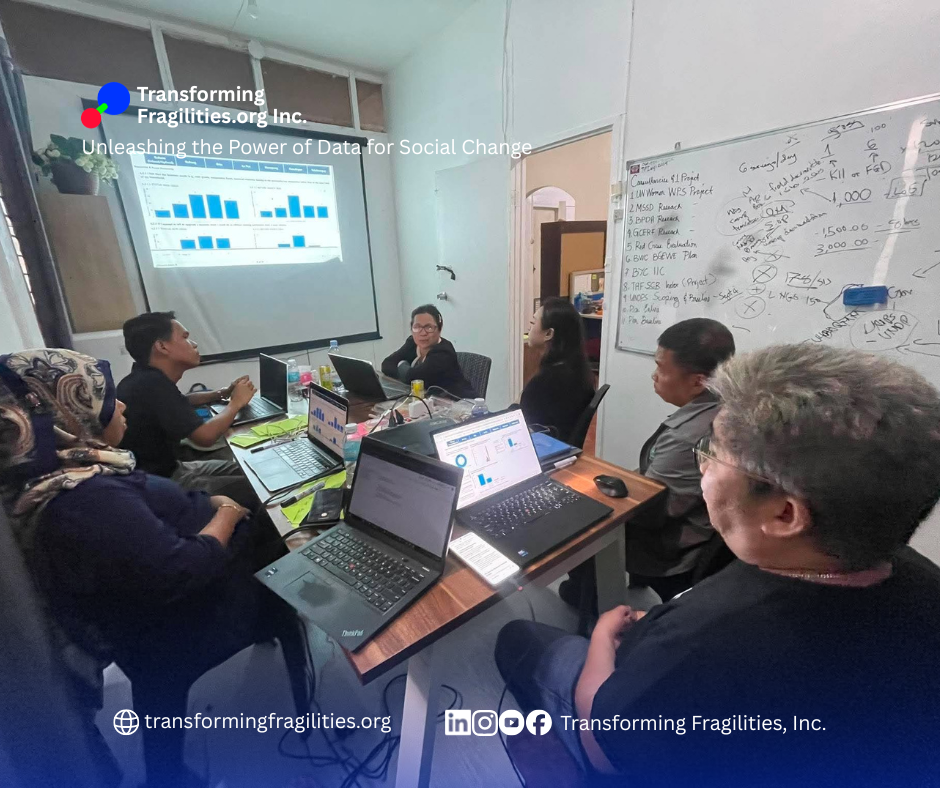
COTABATO CITY, Philippines — Transforming Fragilities, Inc. (TFI) has concluded a rigorous two-day data triangulation workshop to anchor the final evaluation of the Green Livelihood Project (GLP), an initiative targeting climate-vulnerable and low-income communities in Zamboanga City.
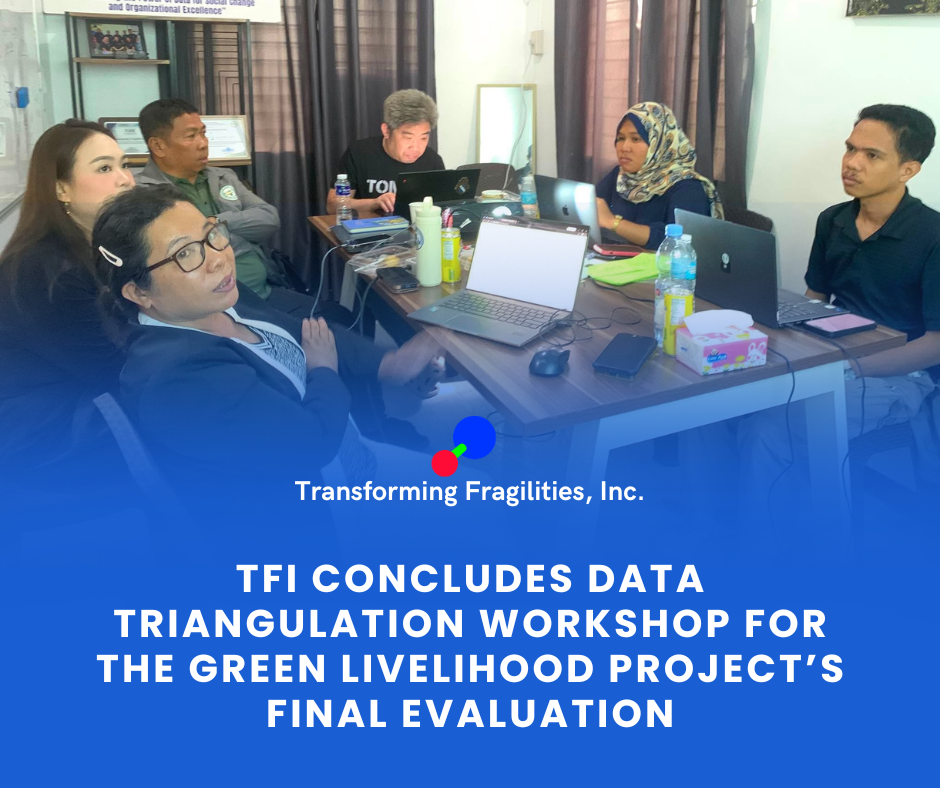
Executing a mixed-methods research framework, the TFI assessment team spent July 11 to 12 synthesizing quantitative and qualitative datasets gathered from seven target areas, including Baluno, La Paz, Mampang, Taluksangay, Dita, Bolong, and Panubigan. The evaluation team deployed a robust methodological design to benchmark project outcomes, processing survey data via SPSS statistical modeling to map broad macroeconomic trends across the population.
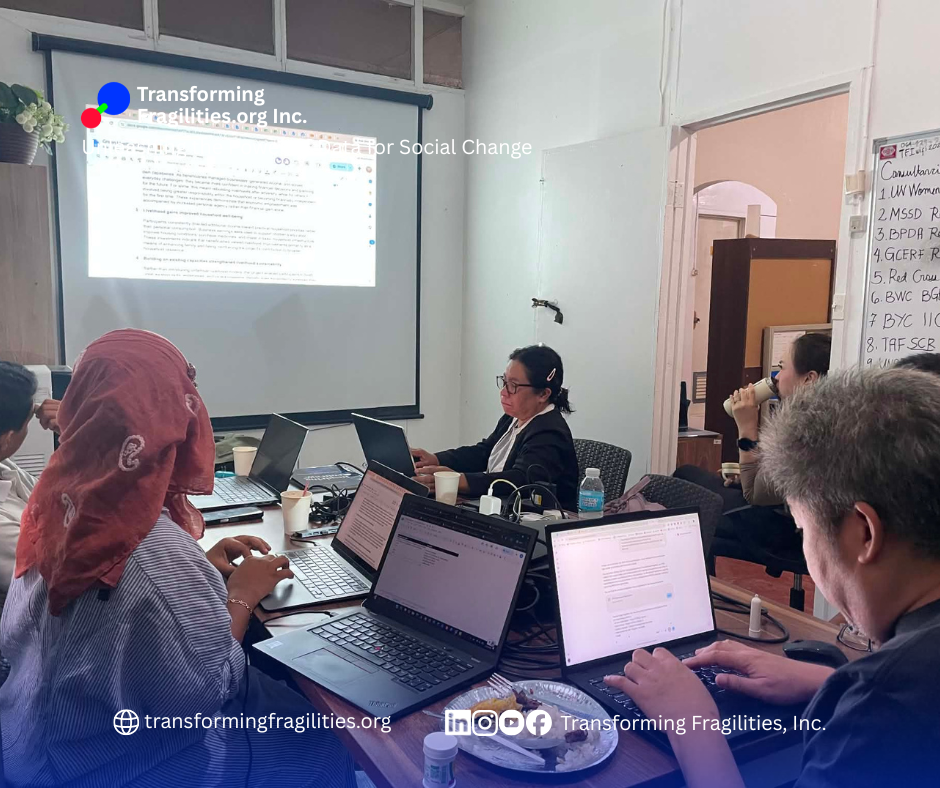
To ground these quantitative metrics, researchers cross-referenced the statistical baselines with focus group discussions, key informant interviews, and Outcome Harvesting workshops. The team further utilized Most Significant Change protocols to capture qualitative human-interest impacts on the ground. By mapping this field data directly against standard OECD-DAC evaluation criteria, the workshop isolated distinct trends regarding project relevance, coherence, effectiveness, efficiency, and long-term sustainability.
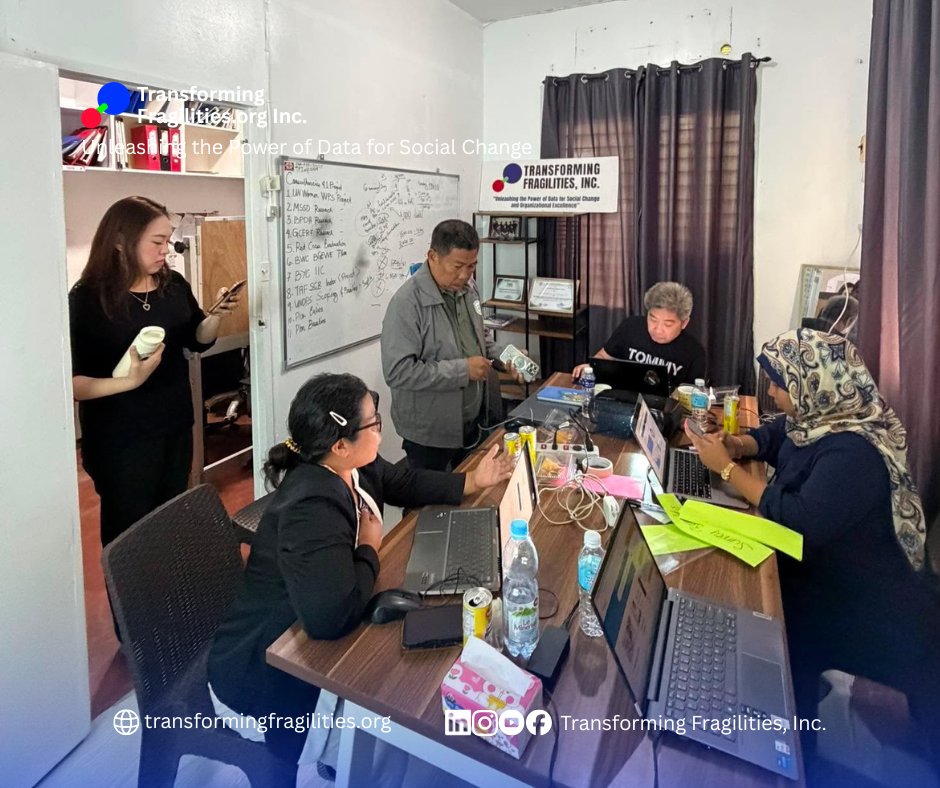
The analytical phase was directed by a multidisciplinary team of subject-matter experts to ensure cross-sectoral scrutiny of the project’s socio-economic footprint. Research Lead Prof. Elsie S. Villanueva, an agribusiness specialist and development economist, managed the socio-economic vector. Villanueva mapped local value chain dynamics to isolate market bottlenecks limiting women-led micro-enterprises and Community Savings Groups.
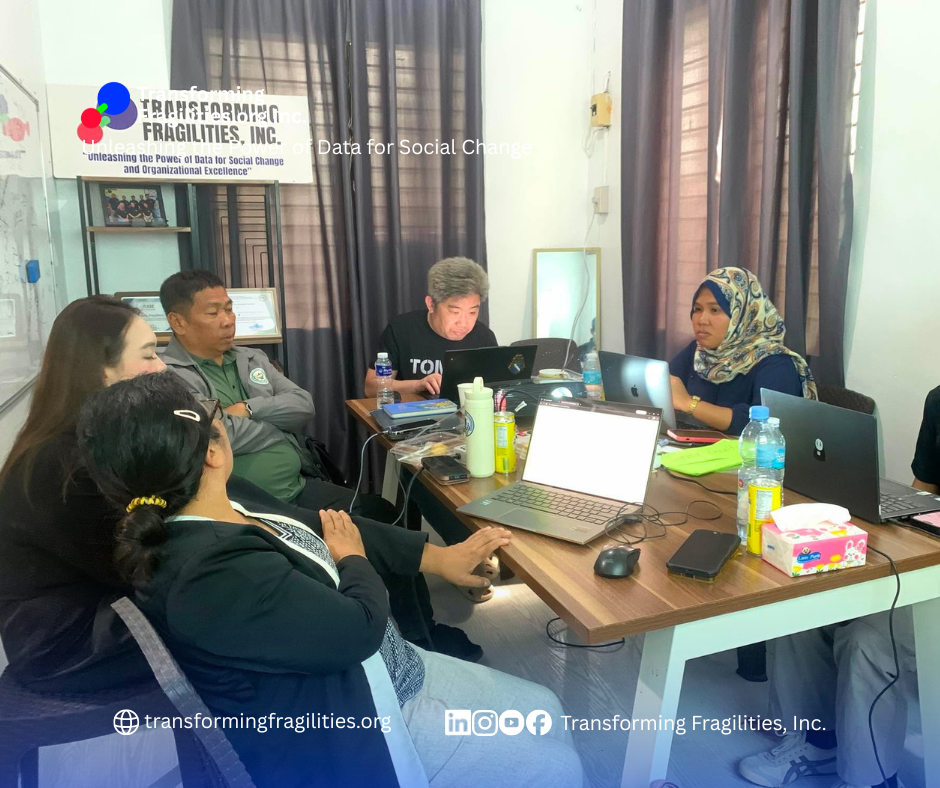
Co-leading the analysis, disaster risk reduction and agricultural engineering specialist Jimmy L. Dalgan evaluated the climate resilience vector, measuring the localized adoption rates of climate-smart agriculture and circular economy solid waste initiatives. Project Officer Norben Tampal anchored data operations, managing the information architecture and cross-referencing raw datasets against analytical frameworks to streamline the synthesis process.
The underlying initiative operates at the intersection of climate adaptation and gender-inclusive economic development. Spearheaded by the Philippine Red Cross and the Spanish Red Cross, the regional project is funded by the Spanish Agency for International Development Cooperation (AECID).
While the workshop locked down core trendlines, TFI officials indicated that the final evaluation report remains in the drafting phase to undergo rigorous peer review and statistical integration. Once finalized, the comprehensive report will serve as a strategic sub-national roadmap for AECID, international Red Cross partners, and local government units to optimize future livelihood and resilience programming across Zamboanga City.