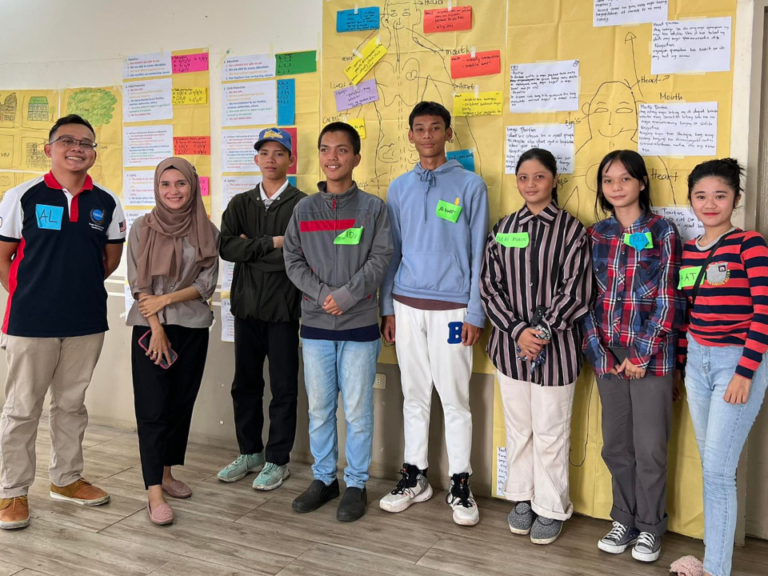
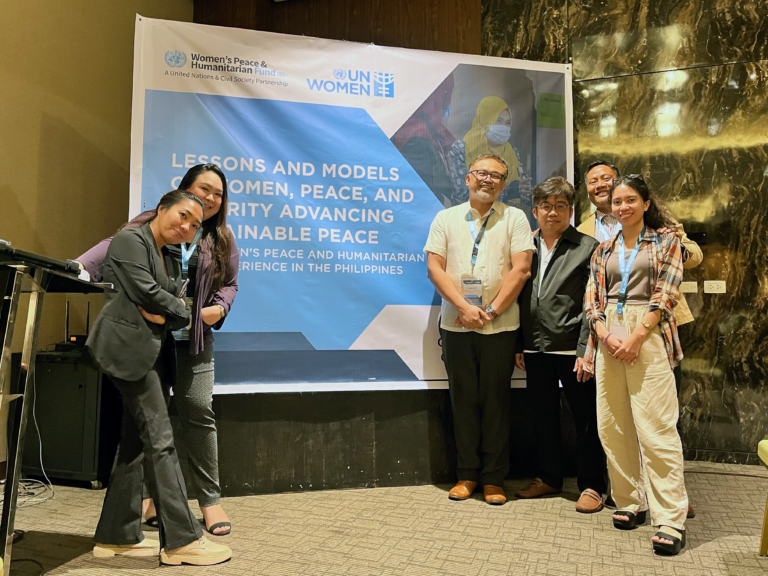
The data collection phase of the Baseline Study for the Partnership for Peace and Development in Mindanao (PPDM): Good Governance in BARMM Programme is entering completion, marking an important milestone in the preparation of the upcoming PPDM initiative.
Commissioned by UNOPS through the SUBATRA Programme, this baseline study aims to establish and evidence-based understanding of the current state of governance and justice systems in the BARMM. The assessment will serve as the foundation for identifying institutional gaps and opportunities for targeted technical assistance under the PPDM Programme, ensuring that future interventions are aligned with the priorities of the 2nd Bangsamoro Development Plan (BDP 2023-2028).
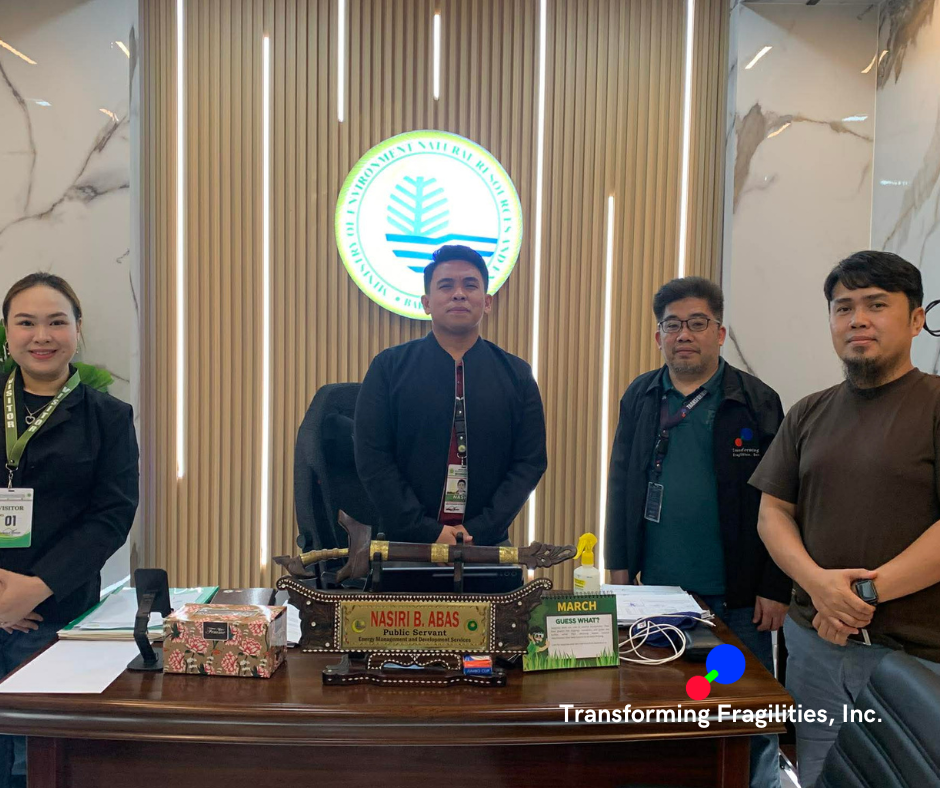
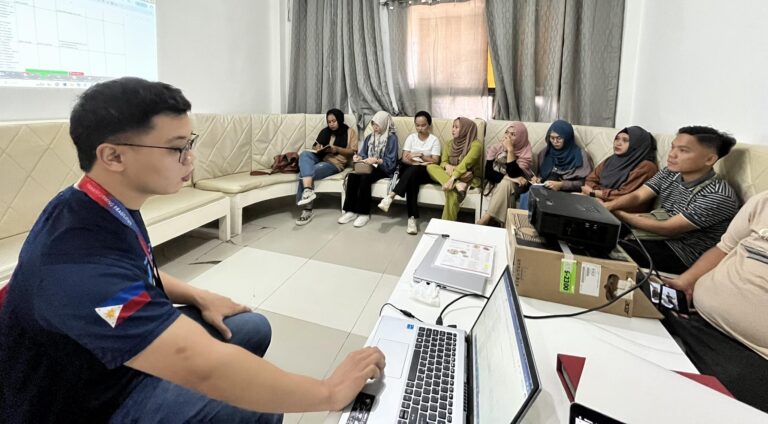
The data collection process involved a series of technical consultations and validation sessions with BARMM ministries, national institutions, development partners, and civil society organizations. These engagements focused on documenting the current landscape of Public Financial Management (PFM), Tri-Justice coordination, and the emerging institutional dynamics in the context of the region’s evolving governance framework.
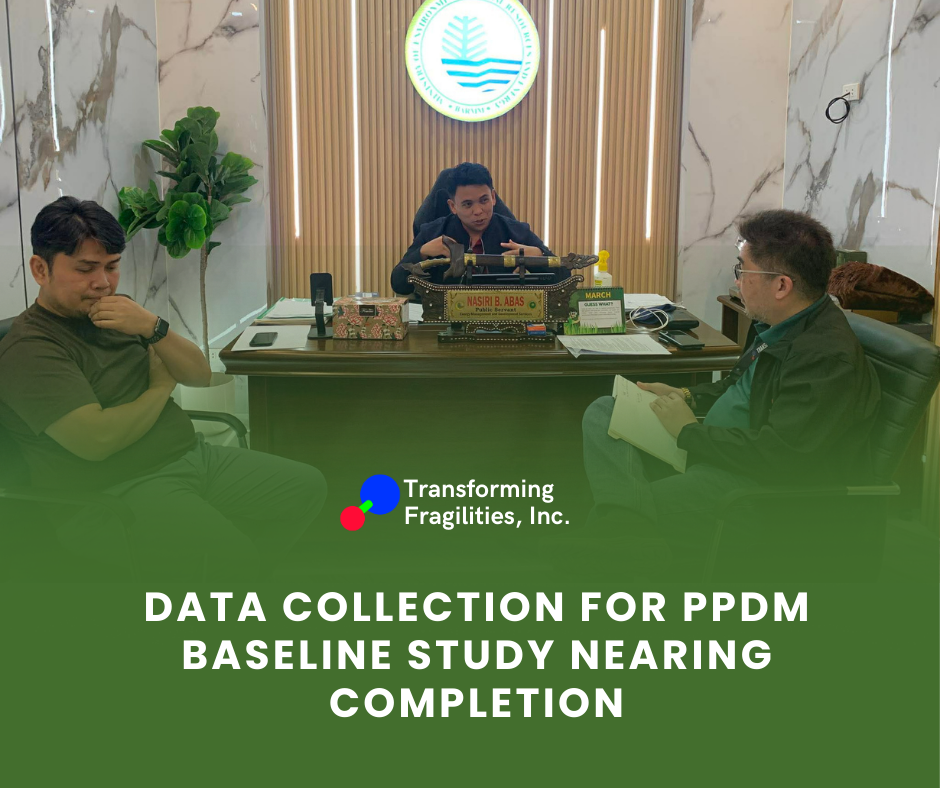
As part of this diagnostic process, the research team from Transforming Fragilities, Inc. (TFI) conducted Key Informant Interviews (KIIs) and Focus Group Discussions (FGDs) with representatives from several key institutions and organizations, including:
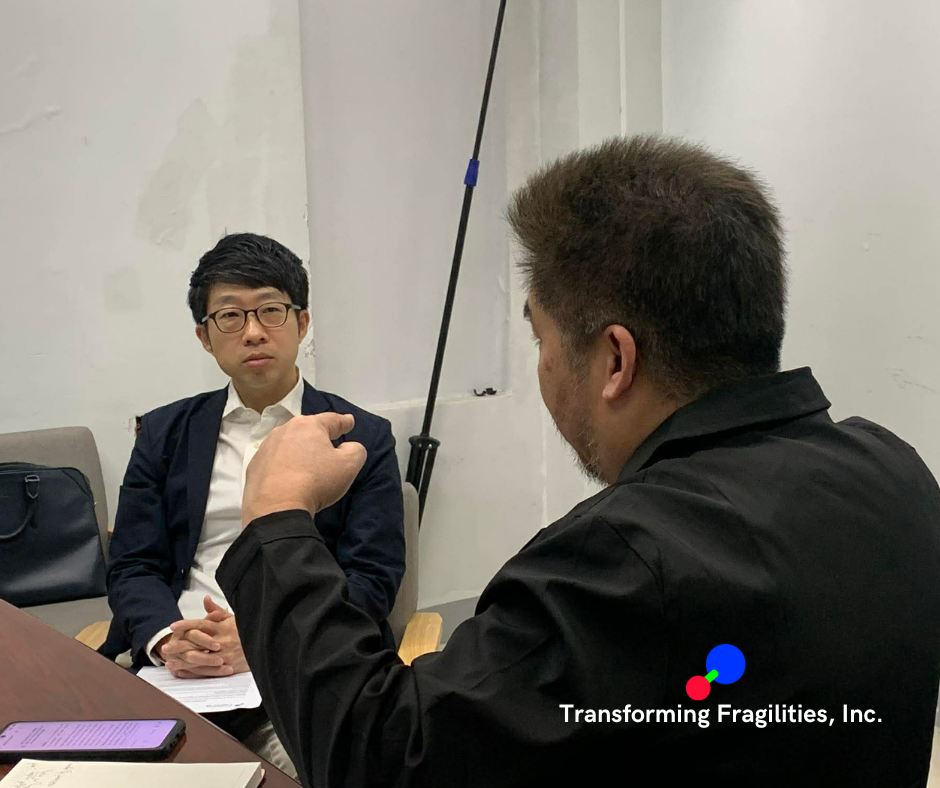
1. Consortium of Bangsamoro Civil Society (CBCS)
2. Ministry of the Interior and Local Government (MILG)
3. Ministry of Social Services and Development (MSSD)
4. Bangsamoro Information and Communications Technology Office (BICTO)
5. Ministry of Environment, Natural Resources, and Energy (MENRE)
6. Ministry of Finance, and Budget and Management (MFBM)
7. Japan International Cooperation Agency (JICA)
8. University of the Philippines (UP)
9. United Nations Children’s Fund (UNICEF)
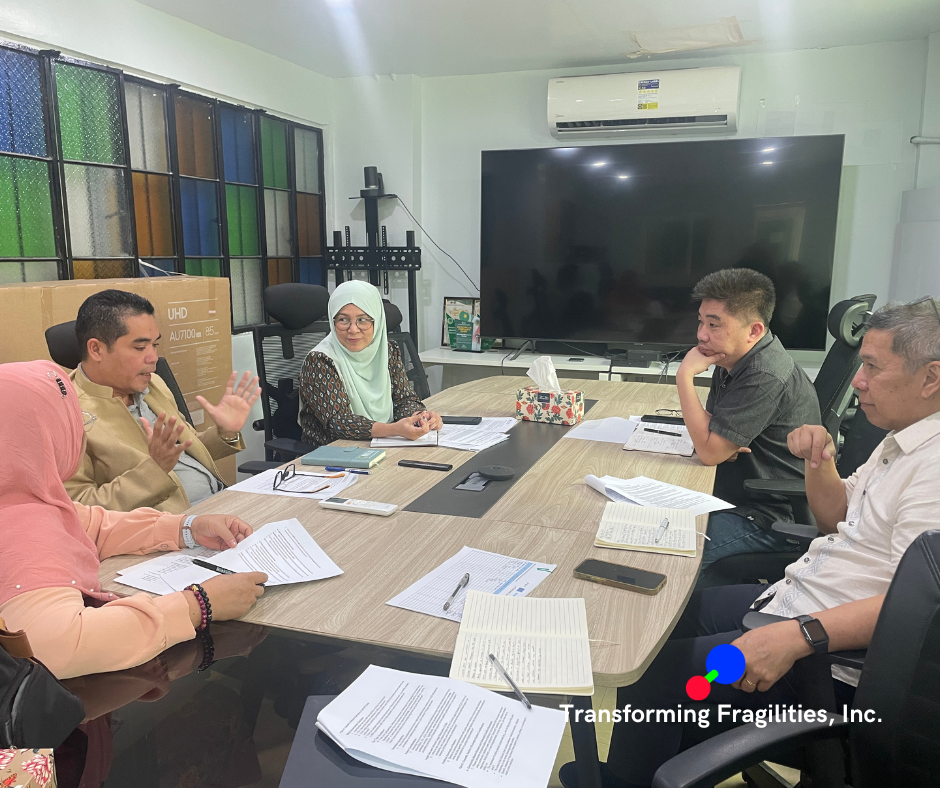
These discussions generated valuable insights on institutional developments and ongoing reforms across BARMM governance systems. Among the areas examined were the implementation of key fiscal frameworks such as the Bangsamoro Budget System Act, progress in the development of the Bangsamoro Revenue Code, and the functional interfaces between Shari’ah, Customary/Tribal, and Formal justice systems under the tri-justice framework.
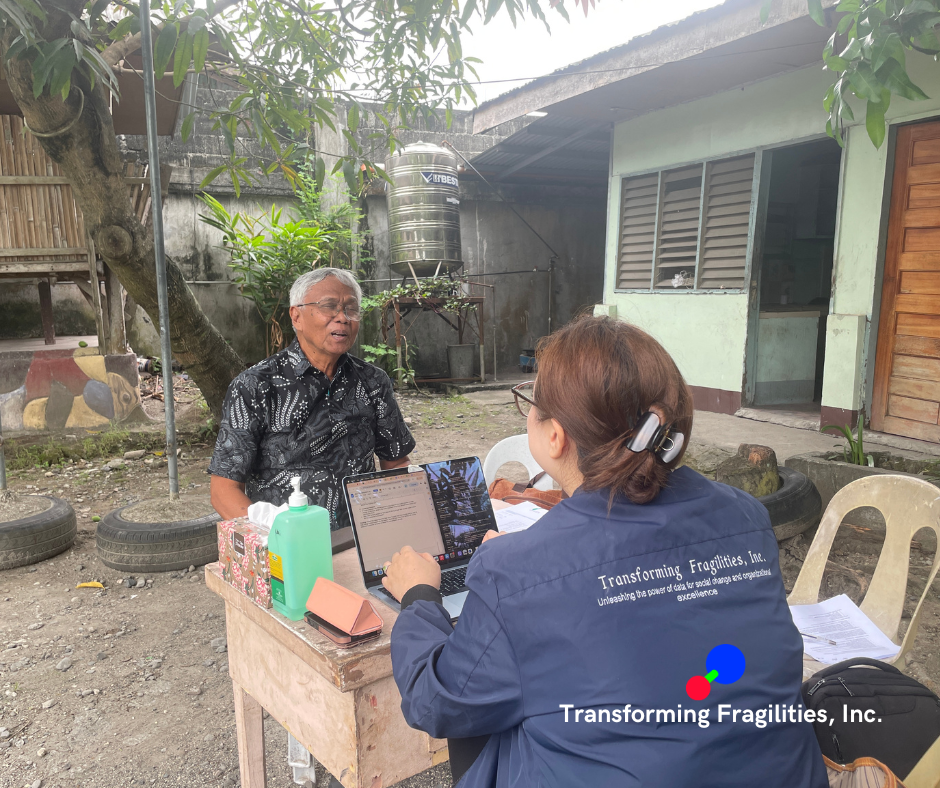
With the field activities now approaching completion, the study now transitions to the analysis and synthesis phase, where findings from the consultations will be consolidated and assessed. The final baseline report will provide a roadmap for PPDM implementation, ensuring that future interventions respond directly to the operational realities and institutional needs of BARMM.