𝐖𝐨𝐦𝐞𝐧 𝐌𝐞𝐝𝐢𝐚𝐭𝐨𝐫𝐬 𝐚𝐭 𝐭𝐡𝐞 𝐅𝐨𝐫𝐞𝐟𝐫𝐨𝐧𝐭: 𝐁𝐮𝐢𝐥𝐝𝐢𝐧𝐠 𝐄𝐚𝐫𝐥𝐲-𝐖𝐚𝐫𝐧𝐢𝐧𝐠 𝐚𝐧𝐝 𝐄𝐚𝐫𝐥𝐲-𝐑𝐞𝐬𝐩𝐨𝐧𝐬𝐞 𝐒𝐲𝐬𝐭𝐞𝐦𝐬 𝐰𝐢𝐭𝐡 𝐋𝐨𝐜𝐚𝐥 𝐖𝐨𝐦𝐞𝐧
In the dynamic landscape of the Bangsamoro Autonomous Region in Muslim Mindanao (BARMM) and its neighboring regions, resilience does not happen by accident; it is built. At the heart of this process are women from local communities whose voices, insights, and leadership have often been overlooked. Through the project titled “Strengthening Moro and IP Women’s Capacities in Early Warning and Early Response (EWER) and Community-Based Conflict Mediation,” Transforming Fragilities Inc. (TFI), with its co-implementing partner, Tiyakap Kalilintad Inc. (TKI), and with generous support from the Women’s Peace and Humanitarian Fund (WPHF) and UN Women, is turning that oversight into transformation.
𝐅𝐫𝐨𝐦 𝐫𝐞𝐜𝐢𝐩𝐢𝐞𝐧𝐭 𝐭𝐨 𝐚𝐫𝐜𝐡𝐢𝐭𝐞𝐜𝐭: 𝐰𝐨𝐦𝐞𝐧 𝐦𝐞𝐝𝐢𝐚𝐭𝐨𝐫𝐬 𝐬𝐡𝐚𝐩𝐢𝐧𝐠 𝐩𝐞𝐚𝐜𝐞
Across municipalities in Maguindanao del Sur (such as Rajah Buayan, Sultan sa Barongis, Datu Paglas, Paglat), Special Geographic Areas (including Kapalawan, Ligawasan, Pahamuddin) of the BARMM, and Sultan Kudarat (including Lambayong & Bagumbayan), new women-led EWER groups have taken root. These groups are more than symbolic—they are actively building the mechanisms to anticipate tensions, to respond early, and to mediate conflict below the radar of major crises.
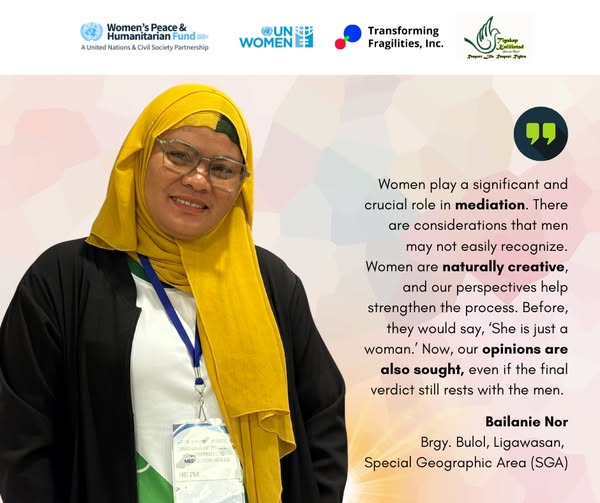
Bailanie Nor, an EWER member from Bulol, Ligawasan in the Special Geographic Area (SGA), reflected: “Women play a significant and crucial role in mediation. There are considerations that men may not easily recognize. Women are naturally creative, and our perspectives help strengthen the process. Before, they would say, ‘She is just a woman.’ Now, our opinions are also sought, even if the final verdict still rests with the men.”
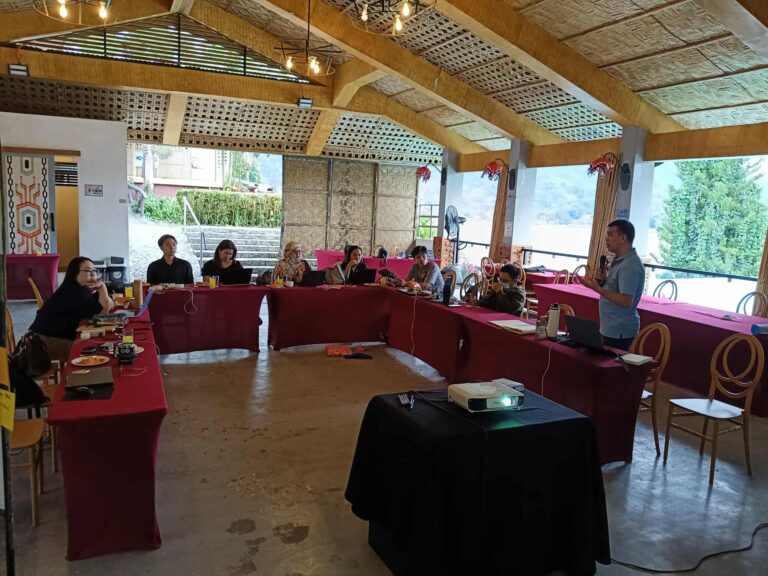
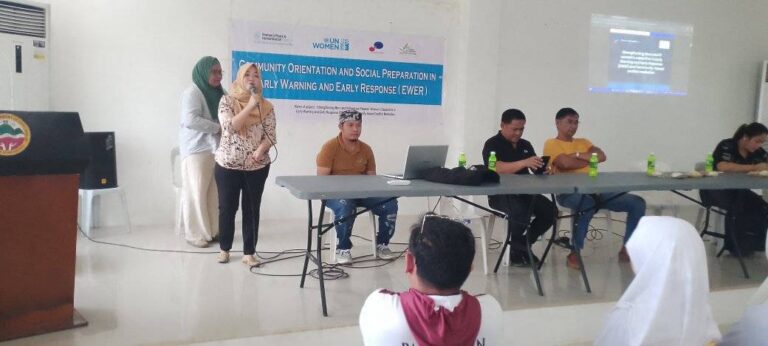
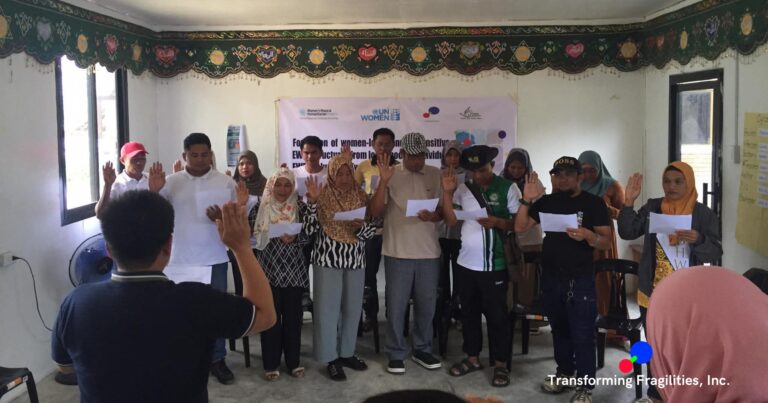
While the quote is anecdotal, it illustrates the broader shift that this project aims to foster: transforming women from passive beneficiaries into empowered actors in local peace and mediation processes. Within this framework, TFI and its partner, TKI, have conducted orientations with existing EWER networks, undertaken community social preparation activities, and are supporting the formal institutionalisation of these women-led groups.
𝐖𝐨𝐦𝐞𝐧 𝐦𝐞𝐝𝐢𝐚𝐭𝐨𝐫𝐬: 𝐛𝐥𝐞𝐧𝐝𝐢𝐧𝐠 𝐜𝐮𝐥𝐭𝐮𝐫𝐞, 𝐠𝐞𝐧𝐝𝐞𝐫, 𝐚𝐧𝐝 𝐜𝐨𝐦𝐦𝐮𝐧𝐢𝐭𝐲 𝐥𝐨𝐠𝐢𝐜
In BARMM’s diverse social fabric, conflict often emerges through localised processes—clan or tribal tensions, resource competition (land disputes), displacement, or identity-based conflict. The project recognises that women mediators bring a distinct set of assets: cultural insight, relational networks, and the capacity to operate in spheres often unseen by male-dominated mediation.
As TFI notes in one of its website blogs and Facebook postings, installing women-led, gender-sensitive EWER mechanisms enables “local women and indigenous people from recipients of aid into active architects of peace.” This transition is intentionally transformational: the goal is not just to include women, but to shift underlying power dynamics of early warning, mediation, and response.
𝐈𝐧𝐬𝐭𝐢𝐭𝐮𝐭𝐢𝐨𝐧𝐚𝐥𝐢𝐬𝐢𝐧𝐠 𝐫𝐞𝐬𝐢𝐥𝐢𝐞𝐧𝐜𝐞: 𝐩𝐥𝐚𝐜𝐢𝐧𝐠 𝐰𝐨𝐦𝐞𝐧 𝐦𝐞𝐝𝐢𝐚𝐭𝐨𝐫𝐬 𝐰𝐢𝐭𝐡𝐢𝐧 𝐬𝐲𝐬𝐭𝐞𝐦𝐬
While forming the groups is a milestone, sustainability calls for more. TFI is guiding the new EWER groups through organisational development, legal registration, conflict mediation training, and early-warning reporting systems. For example, the intention is to register the groups with the Securities and Exchange Commission (SEC) and to facilitate their accreditation with MLGU local special bodies to enshrine their legal standing and community legitimacy. Through these measures, TFI is working to ensure the women mediators are not standalone actors, but institutionalised agents woven into the broader peace and security architecture of the region.
𝐓𝐡𝐞 𝐢𝐦𝐩𝐚𝐜𝐭 𝐚𝐡𝐞𝐚𝐝: 𝐞𝐧𝐚𝐛𝐥𝐢𝐧𝐠 𝐥𝐨𝐜𝐚𝐥 𝐩𝐞𝐨𝐩𝐥𝐞 𝐭𝐨 𝐬𝐡𝐚𝐩𝐞 𝐭𝐡𝐞𝐢𝐫 𝐟𝐮𝐭𝐮𝐫𝐞𝐬
The ambitions of the project are clear:
• Equip hundreds of women (and men) with skills in early warning – early response, mediation, and reporting.
• Ensure that women mediators increasingly occupy decision-making roles in conflict prevention and response.
• Foster sustainable, community-owned mechanisms that respond quickly to tensions and build bridges before violence escalates.
• Embed a gendered lens within peace and resilience systems, making them more responsive to all community members.
As TFI’s mission statement underscores, it is one of the fastest-growing local NGOs in Mindanao, providing monitoring, evaluation, institutional, and capacity-building services for peace, justice, and inclusive development.
𝐋𝐨𝐨𝐤𝐢𝐧𝐠 𝐚𝐡𝐞𝐚𝐝: 𝐚𝐝𝐚𝐩𝐭𝐢𝐧𝐠, 𝐬𝐜𝐚𝐥𝐢𝐧𝐠, 𝐬𝐮𝐬𝐭𝐚𝐢𝐧𝐢𝐧𝐠
As the project moves from formation to operation, several challenges and opportunities present themselves:
• Retention of volunteer mediators
Ensuring those trained remain active members of the EWER groups, remain motivated, and are supported.
• Integration with local governance
Linking EWER groups and women mediators with barangay, municipal, and regional systems, so they are recognised and resourced.
• Data and reporting systems – Strengthening mechanisms for early-warning, incident tracking, and mediation outcomes in gender-sensitive formats.
• Cultural adaptation and community legitimacy – Continuing to tailor mediation models to local contexts—both Moro and Indigenous communities—with respect to traditions, language, and governance.
• Scaling to other areas – With the initial establishment in key municipalities, the model has the potential to be replicated across additional municipalities and provinces within BARMM and its neighbouring regions.
In a region marked by historic fragility and ongoing change, the work of women mediators supported by TFI and its partners is neither fringe nor symbolic—it is foundational. By transforming women from bystanders into active mediators and early-warning actors, the project is laying the groundwork for a peace built from within, not imposed from outside. The vision is clear: local women, grounded in culture, equipped with skills, connected to systems—leading the charge for timely response, meaningful dialogue, and sustainable resilience in BARMM.